You know what I love? I love old-school, high salt, pre-packaged, preservative-heavy onion dip. I enjoy shoveling the dip into my mouth using rippled potato chips. Not a good habit. Not good at all. The same part of my brain that thinks it likes the poisonous, gelatinous dip so much loves candy corn (partially hydrogenated corn syrup chunks), movie theater popcorn (yes, I would like that drizzled with trans fat sauce), and sour gummy worms (these are not food in any way). Also, it’s my eighth birthday. Also, sorry I’m not sorry.
To trick this part of my palate, which was born 20 years ago in the candy aisle of 7-Eleven and is in it for the long haul, I make snacks like this:
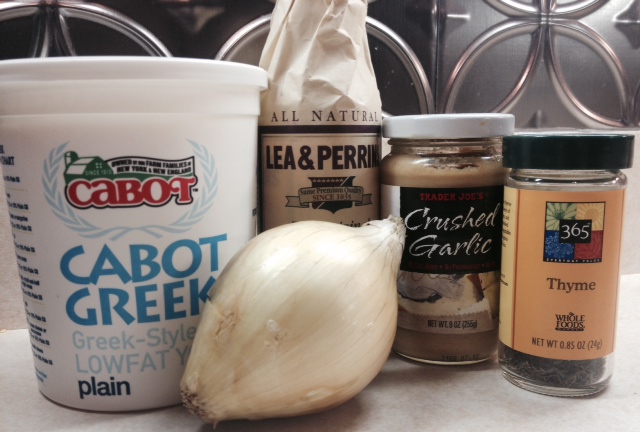
HEALTHY CARAMELIZED ONION DIP Ingredients:
1 large yellow onion, cut into small dice
1 tsp crushed garlic or 2 garlic cloves, minced
1 tbsp olive oil
1/2 tsp kosher salt
1 tsp dried thyme or 1 tbsp fresh
splash Worcestershire sauce
1 cup Greek yogurt
carrots, broccoli, cauliflower, peppers, or crackers for dipping (especially good with Mary’s Gone Crackers)
Directions:
Heat the olive oil in a non-stick pan over medium-high heat. Add the onions and salt and brown, stirring continuously, for 12 minutes. Reduce heat to low and continue to cook, stirring occasionally, for 15 more minutes. The onions will turn a lovely dark brown and smell heavenly.
Stir in the garlic and thyme, raise heat to medium, and cook for another minute until the garlic is fragrant. Add a splash of Worcestershire and allow it to mostly cook off. Stir the onions into the Greek yogurt and allow it to chill for a bit. Serve with veggies and bask in the healthy glow of your matured decision-making skills!
We’ve all heard the myriad health benefits of reducing our meat consumption, but what about the benefits to our planet? Mother Earth News published a great article succinctly summarizing the environmental impact of our monstrous American meat consumption, and I wanted to share it. It goes without saying that raising, preparing, and eating meat is deeply ingrained in our culinary identity as Americans, but aren’t American innovation and ingenuity a greater source of pride? What would be so revolutionary about an American shift to a fiscally responsible, sustainable, self-preserving plant-based diet? Wouldn’t that shift put us ahead of the curve? Food for thought.
Here are the facts that jumped off the page at me from the Mother Earth article:
Nearly all supermarket beef, chicken and pork — the three most consumed types of animal protein in this country — are produced on enormous industrial-scale farms. The U.S. Environmental Protection Agency (EPA) defines these huge farms as “agricultural enterprises where animals are kept and raised in confined situations. [Such operations] congregate animals, feed, manure and urine, dead animals, and production operations on a small land area. Feed is brought to the animals rather than the animals grazing in pastures, fields or on rangeland.”
On these factory farms, animals eat commodity crops — primarily corn and soybeans — that are subsidized by taxpayers via the Farm Bill. Half of all North American cropland — about 149 million acres — produces animal feed from genetically modified (GM) crops designed to resist weedkillers such as Roundup. These crops have spawned an epidemic of herbicide-resistant “superweeds.” In 2012, superweeds infested 61 million acres of farmland growing GM crops. The result: An increase in herbicide use rather than a reduction, as well as “stacking” of genetically modified traits in seeds to allow cocktails of potent herbicides to be used on crops.
Beef cattle are given anabolic steroids as well as estrogen, androgen and progestin — commonly called “growth hormones” — to make them put on weight more quickly. Although the European Union banned the use of these hormones in 1988, they’re still commonplace in the United States. “Measurable levels of…growth-promoting hormones are found at slaughter in the muscle, fat, liver, kidneys and other organ meats,” says the Organic Consumers Association in a position paper. “Every beef-eating American for over 50 years has been exposed to these hormones on a regular basis.” Pigs, too, are fed growth hormones. The use of growth hormones in poultry, however, has been illegal in the United States since the 1950s.
Animal feed includes low-level (sometimes called “sub-therapeutic”) doses of antibiotics to promote growth and offset unsanitary, overcrowded conditions. About 80 percent of all antibiotics sold in the U.S. are administered to livestock, a figure acknowledged by the U.S. Food and Drug Administration (FDA) in 2010. These drugs pass through manure and leach into the soil and groundwater, ultimately polluting neighboring rivers and streams.
My decisions as a consumer are weighing more heavily on me as I become aware of their rippling consequences (I think this is called “maturing” in some cultures. hmm). I love the occasional taste of meat and am by no means scolding…. but this is shocking stuff. If you’re considering reducing how much meat your family eats but you’re not sure how to approach the change (most of us are programmed to cook with meat), try introducing meatless Mondays or Mark Bittman’ wonderful flexitarian approach: VB6. Vegan before 6pm!
What are your thoughts on the effects of excessive meat consumption across our country?
The introduction to this glorious soup should start with an introduction to my uncle Brian and aunt Liz. They are runners, scientists, urban farmers, yogis, cat whisperers, and cooks. They’ve been known to move to China and Korea to teach English. They work tirelessly to restore the creek by their home* to health. They’ve collected water in rain barrels decades longer than your ironically bearded neighbor has, and they do things like compost and march for clean energy because everyone should do those things. On top of all this, they find time to fearlessly reinvent their careers and go see St. Vincent at the 9:30 Club. They’re that cool.
So now you know a bit about the brilliantly kaleidoscopic lives that inhabit the sunny kitchen full of great conversation where my uncle Brian threw together this soup the last time we visited. The soup is as healthy and vibrant as Liz and he. “Oh, it’s just got a little of everything in it,” Brian humbly explained as Dave and I poured bowls of the stuff into our gaping faces. If we could have done keg stands over the stockpot, we would have. My sweet mama had come up that weekend to visit and she loved the soup- so did my 20-month-old curly-topped nephew! It’s a crowd-pleaser.
the neph’ showcasing wicked awesome curls, spoon-handling skills, and Mardi Gras beads
I emailed Brian asking how to make the soup soon after and he gave me a true cook’s recipe- ingredients, ideas, tips, no measurements. The mark of a cook at home in his kitchen. I’ve included some of these notes. Behold, Brian’s Sunday Soup.
BRIAN’S SUNDAY SOUP
Adapted from Brian Parr
Ingredients:
1 bag of mixed beans, soaked overnight
eeoo (extra virgin olive oil)
1 onion, diced
3-4 garlic cloves, minced
Spice mix (edit according to your tastes): 1/2- 1 tsp coriander, 1/2-1 tsp curry powder, 1/2 tsp-1 tsp red pepper flakes, 1/2- 1 tsp turmeric, rosemary is nice if you have a bush, cumin (but only a little as you know how it overpowers everythingelse)
1 sweet potato, diced
1 russet potato, diced
sweet corn (sometimes)
5-6 carrots, peeled and chopped into coins
5-6 stalks celery, chopped, greens chopped and reserved
1/3 cup brown lentils
1/3 cup medium pearl barley (leave out if you’re avoiding gluten)
2-3 quarts low sodium vegetable stock, or 2-3 quarts water and 1 1/2 tbsp low sodium vegetable base
1 can of diced tomatoes, optional
freshly ground black pepper
a little bit of the vinegary juice form a jar of hot pepper rings adds a nice little bite!
red cabbage, sliced into confetti for garnish
mustard greens, sliced into confetti for garnish (super important and make all the difference. Plus, they are easy to grow and have a long season)
your favorite hot sauce for serving
Directions:
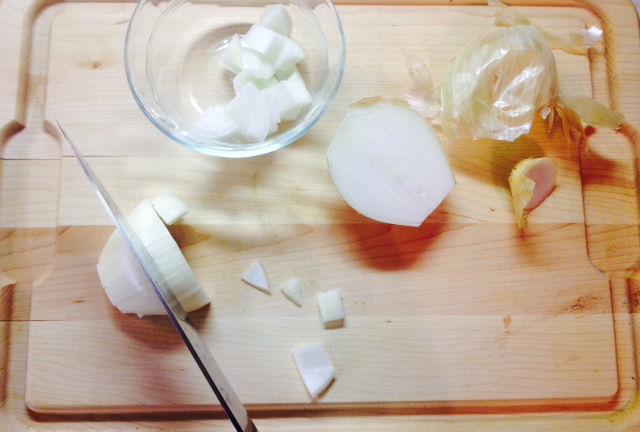
One day ahead, or before you leave for work: SOAK YOUR BEANS. Place them in a bowl or pot, cover with water to a depth of 2 inches above the beans, and let soak for 8 hours or overnight. I put my bowl of beans and water in the microwave to cat-proof while I was at work. Okay, now fast-forward, cooking show-style to: perfectly soaked beans! Rinse and drain them twice. Chop your veggies on your pretty wooden cutting board, which you should care for with food-grade mineral oil, did you know?
This soup is a very manly soup (if soups can be manly), as the recipe came from Brian and Dave made it at our house. Man Soup: for men, by men. In a large stockpot, have yo’ man heat 2 tablespoons olive oil over medium heat. Saute onion in eeoo in the pot, Get them to the browning stage on medium to low heat and then throw in the garlic at the end. Move the onion to the sides of the pot, create a space in the middle, and add spices to ‘dry cook.’ This gets really aromatic, sometimes to the point of burning eyes and coughing, achh, ohh, ahh, hack, hack…. As they cook on medium heat, be careful not to burn- they are quite potent!!
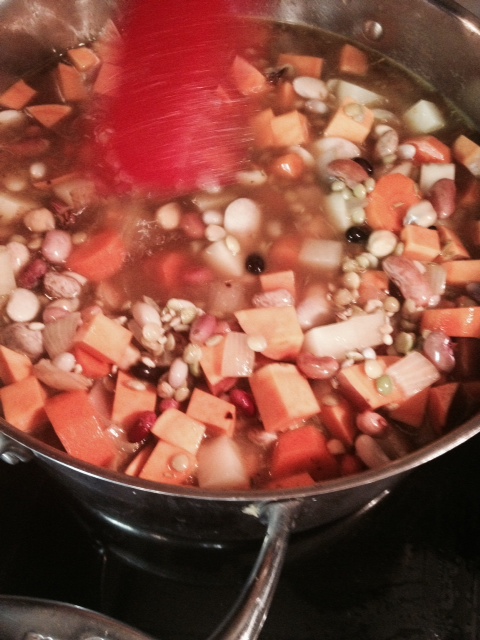
When your spice blend is fragrant and toasty, add the beans, russet potato, sweet potato, corn, carrots, lentils, tomatoes, and barley (you read that right- don’t add the celery!). Cover with enough water or stock to come a few inches above the veggies and beans and add vegetable base, if using. Stir the soup, raise the heat to medium-high and bring it to a boil. Reduce heat, cover, and simmer for 1 1/2- 2 hours on low, until the beans are tender.
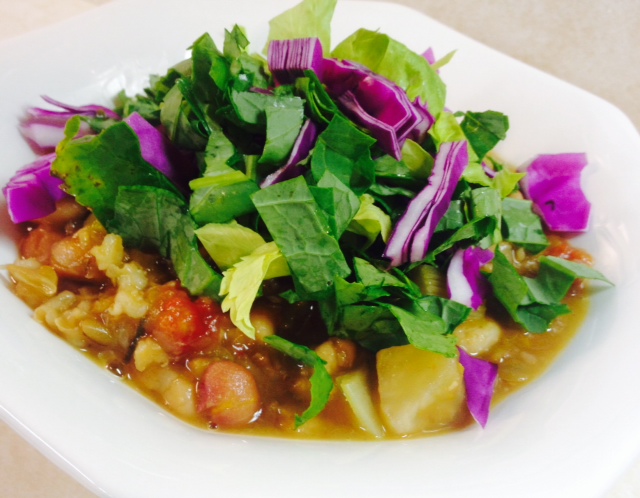
When the beans are tender, stir in the chopped celery. Give it a taste and add black pepper. Salt, if needed. Dip up a few bowls and top with the gorgeous, ribbony mix of red cabbage, celery greens, and mustard greens, the last of which give the soup a leafy, horseradish-like bite. You’ll be glad you did! Pass some hot sauce around. And go thank you uncle and aunt for being your uncle and aunt. It’s probably long overdue.
lovely greens and purples
Thank you, Brian and Liz, for the hospitality and the memorable meal.
A few weeks ago, I posted about the nutritional philosophies of my beloved Michael Pollan, journalist and food activist extraordinaire. Pollan believes that the American diet has been seriously skewed over the last 50 years, coinciding with the boom of the food, fast food, junk food, and nutrition industries- a theory I agree with. He’s also the author of my favorite food quote: “Eat food. Not too much, Mostly plants.” Perfect summary! As an interesting part of his belief in a diet comprised of simple, minimally processed, whole foods, Pollan, along with many others in the food community, suggests that the fat-free craze of the ’70s, ’80s, and ’90s and the subsequent elimination of fat from our diets contributed to the current American obesity epidemic.
Wait, what? Fat-free diets made us fat?
mind: BLOWN
You betcha. In the 1970’s, as heart disease rates crept upward, Americans were so desperate for a quick fix that we bought into new and shaky nutrition guidelines telling us that all dietary fat was bad. We stripped it from our diets, following the guidelines and replacing fat with sugar and carbs. And not just any carbs- highly refined, nutritionally void, calorie-dense carbs. But what if we’d replaced the fat with complex carbs!, you may argue, whole grains and fiber and brown rice and glycogen stores and all that!, you may say. Exactly. As NPR’s Allison Aubrey pointed out in her piece about the fat-free craze, “…the kinds of carbs the authors of the [nutrition] guidelines had in mind were whole grains, fruits and vegetables. But this message was lost in translation. What did Americans hear? Fat is bad; carbs are good.” Enter the food industry, cleverly sweeping in to replace fat with tasty, “guilt-free,” high sugar, highly processed, and, most importantly, highly profitable alternatives.
Think fat-free salad dressing: remove all fat, replace with sugar and corn syrup. Check out the ingredient list of Kraft’s Fat Free Italian:
Ingredients: WATER, VINEGAR, SUGAR, CORN SYRUP, SALT, PARMESAN CHEESE* (PART-SKIM MILK, CHEESE CULTURE, SALT, ENZYMES), CONTAINS LESS THAN 2% OF GARLIC, ONION JUICE, WHEY, PHOSPHORIC ACID, XANTHAN GUM, YEAST EXTRACT, SPICE, RED BELL PEPPERS*, LEMON JUICE CONCENTRATE, GARLIC*, BUTTERMILK*, CARAMEL COLOR, SODIUM PHOSPHATE, ENZYMES, OLEORESIN PAPRIKA, POTASSIUM SORBATE AND CALCIUM DISODIUM EDTA (TO PROTECT FRESHNESS). *DRIED. CONTAINS: MILK.
How are sugar, corn syrup, and preservatives better for the body than good old olive oil and vinegar? Simply put, they’re not. The sky-high obesity and diabetes rates that followed the food industry-benefitting industrialized diet have shown us just that. Super-sized portions, added sugars at every turn, and carby convenience foods to pander to our too-busy lifestyles blew us up and pulled us away from cooking the way our grandmothers did, which we realize now wasn’t such a bad way to cook.
FAT CHANCE:
One particularly vocal advocate of the benefits of fat and the detriments of sugar is triathlete Sami Inkinen. Inkinen, founder of Trulia, is a freak of nature athlete and computer-brain from some far-off Nordic land where the clean air, snow-capped mountains, and crystal clear streams produce people like him all the time. He’s so convinced that fat consumption is essential to building a healthy human body (and that sugar is toxic) that this June, he and his wife are rowing- unsupported -the 2400 miles from San Francisco to Hawaii, consuming mostly protein and fat to prove their point. This is a triathlete, mind you- a person you might think would preach a high-carb diet for energy, but no. He maintains a no added sugar diet and a moderate carbohydrate intake. Inkinen’s way of approaching carbs and fighting sugar may seem extreme, but it’s definitely interesting; his stellar triathlon performance certainly doesn’t betray his nutrition principles. You can follow and donate to the Fat Chance Row’s noble fight against sugar at FatChanceRow.org.
So, what now, masters Pollan and Inkinen? Here we are in 2014- overweight, over-medicated, cutting sugar and reintroducing simple, whole foods to our diets. And learning (with trepidation) how to reintroduce healthy fats to our diets. Nuts, coconut and coconut oil, olive oil, olives, fish if you eat it, organic dairy if you eat it, avocado, flax, chia, seeds, and so many more sources await a healthier you. Run from sugar. Embrace healthy fats for a healthy weight and a happy, healthy body.
Now let’s have some fun with a giveaway!
Cute logo, huh? I think so, too. My Coconut Kitchen is a Lake St. Louis-based company that specializes in luscious coconut butters chock full of the healthy fat and amino acids your body needs for healthy cell building and repair. Owner, athlete, and coconut whisperer Angie Carl expertly whips toasted, unsweetened coconut and natural flavors into versatile spreads. Her wide flavor selection ranges from classic toasty coconut to cherry-almond. And it gets better- check out the coconut butter’s impressive nutritional information.
I ordered my first 3-pack last week and brought it to my in-laws’ house. Sharing in itself was a deserted island-style gamble, as we all love to eat… I made it home with one jar. The five of us slathered the delicious spreads onto fruit and crackers and mixed it into coffee, tea, groats, and yogurt. To be honest, I ate more than a bit straight off the spoon. More honesty: I regret nothing. My Coconut Kitchen has a whole slew of ideas for how else to use the butters:
In smoothies, protein shakes and oatmeal
Spread on banana, apple or zucchini bread
On top of yogurt, cottage cheese, cereal or granola
Warmed up and used as a dip for fruit, cookies, or drizzled over bacon
Spread on pancakes, French toast, crepes or a peanut butter sandwich
Drizzled over ice cream or frozen yogurt
Mixed with red hot sauce and served with chicken, shrimp of veggies
In one of their tasty recipes< check out this amazing, chef-created list!
Straight off of the spoon! < Lauren tested and approved
I want to try them all! I’m especially excited to add some to our favorite sweet potato and red lentil soup the next time I make it. Coconut butter enthusiasts out of the area can order the entire range of My Coconut Kitchen products online, and St. Louis area locals can find Angie’s coconut butters at Local Harvest, Freddie’s Market, O’Fallon Nutrition, Emerge Fitness Training, and at a variety of farmer’s markets and local events each month.
For today’s post, Angie has graciously provided allez! gourmet with a 3-pack sampler of 8-oz jars for our first giveaway! Thanks, Angie! To enter to win the sampler, which includes roasty toasty coconut, cherry on top, and Cooper loves chocolate, follow allez! gourmet and leave a comment in the section below. Tell me how YOU incorporate healthy fats into YOUR diet! One winner will be selected at random Wednesday (4/9) at 11:30 am CST and announced on next week’s Thursday entry (4/10).
This vibrant, fragrant dish makes me happy. Its colors and flavors of make me think of lovely Nepal and of colorful Northern India, which I imagine to be one of the most lively places in the world. The tantalizing smell of onion, ginger, and garlic cooking in coconut oil will make your kitchen feel like this:
Holi festival! photo: National Geographic
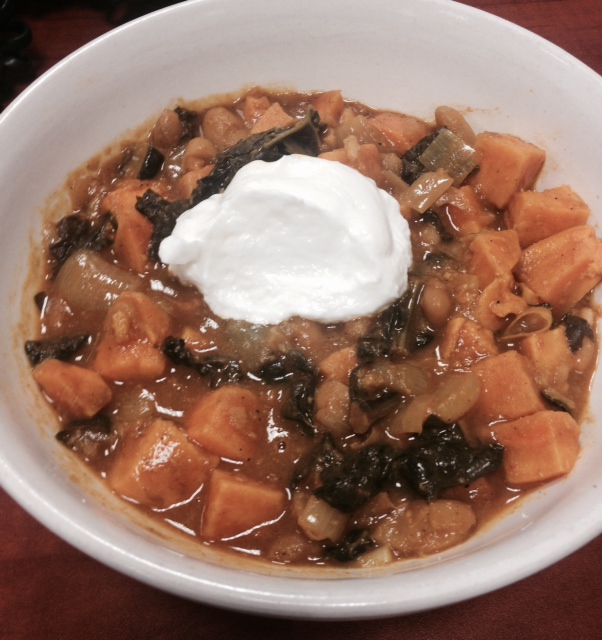
Korma is derived from the Urdu word ḳormā, or “braise.” Even though there’s no meat in this dish, you braise the sweet potatoes by cooking them with curry powder, onion, and a bit of tomato sauce before simmering them in coconut milk with kale and white beans. You can serve this korma with rice if you like or serve as a side dish. I found that it really holds up on it’s own; I dolloped mine with some plain Greek yogurt for a hearty meal. स्वादिष्ट (delicious)!
In a large stockpot, heat coconut oil over medium. Add the onion and saute until it’s translucent, about 5 minutes. Add the garlic and ginger and saute another minute.
Add the sweet potatoes, curry powder, and tomato sauce. NOTE: if you don’t like curry powder (and many people don’t), omit it for Pete’s sake. Add paprika or brown sugar and pepper or red curry paste, or nothing or anything you like in its place. But if you do like curry powder, add it now. Continue to cook the sweet potatoes over medium for about ten minutes, until they begin to soften a bit.
Add the coconut milk, kale, and white beans. Bring the korma to a boil, cover, reduce heat to medium-low, and simmer for 20 minutes.
look at that nutritious jumble!
That’s all! Uncover and serve, you wholesome and adventurous veggie-lover, you. Top with yogurt or diced cucumbers. Enjoy!
I love eggplant parmesan. I love lasagna. I do not necessarily love heavy meals that can’t be scarfed without guilt and/or heartburn unless those meals involve pizza and/or cookies, which have their own special place in my life and in the universe. This lasagna is really a lovely meal to serve, is very cheap to make, and is easy to assemble. Fresh veggies, grain free, a blender sauce, creamy ricotta, earthy eggplant, light and rich all at once. Ahh.
So satisfy your Italian cravings and up your veggie intake. I served it with mixed greens on the side and Parmesan for passing. How will you serve your eggplant lasagna?
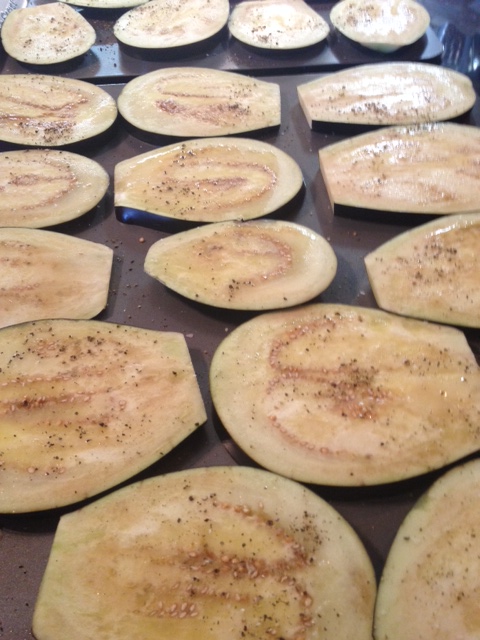
You will probably want to slice your eggplant first, as it’s the only pseudo labor-intensive part of this recipe. Cut the top off of your eggplants so you can stand them sturdily on one end. With a large knife, slice them in 1/4 inch slices from top to bottom (you may instead slice the eggplants horizontally, if you like; comme ci, comme ça). Brush both sides of the slices with 2 tbsp olive oil and sprinkle with salt and pepper, then arrange on two baking sheets.
sliced and ready to broil
Okay, now preheat your broiler. While it heats up, puree garlic, 1 tbsp olive oil, and 1/4 tsp each salt and pepper in a blender. Sauce: done! Fabulous! Slide the first baking sheet of eggplant into the oven and broil your rustic slices for 3-4 minutes per side, flipping once. Repeat with the second batch.
While the eggplant cooks, grab a small bowl and combine the ricotta, egg, basil, and another 1/4 each salt and pepper. Mix throughly to combine. When all eggplant slices have been broiled, lower the oven heat to 400. In the bottom of a deep 8″ baking dish or a 9×13″ dish (whichever will hold the length of your eggplant slices), spread half of the tomato sauce. Layer one-third of the eggplant slices over the sauce and top with half of the ricotta mixture. Repeat the eggplant layer and the ricotta layer, using the remaining ricotta. Top with the last of the eggplant, the sauce, the Parmesan, and a few decorative basil leaves if you’re feeling fancy.
Bake for 15-20 minutes, uncovered, until the lasagna bubbles and the top is slightly browned. Take an artful picture of your cat in the meantime.
rawr
Remove lasagna from the oven and let cool ten minutes before serving. The mixed greens with oil and vinegar really were a perfect accompaniment. We had a few chicken breasts left over from the night before, so we had those, too. The greens alone would have been fine. This meal makes a very pretty and light lunch or dinner, all while being easy on the wallet and waistline. Enjoy!
Need a quick dinner idea? Have little time but want lots of flavor? Do you have a pound of shrimp or chicken and a green vegetable handy? Let’s do this.
COCONUT-CHILI SHRIMP & SNOW PEA BROWN RICE RISOTTO
1 tbsp red curry paste (or increase chili garlic paste by 1/2-1 tbsp)
1 tsp kosher salt
1 can light coconut milk
4 cups cooked brown rice
1 scallion, sliced (optional)
juice of a lime (optional)
Directions:
Heat the coconut oil in a deep saucepan over medium high heat. When the oil is hot, add the shrimp or chicken and cook, stirring, until no longer pink (3 minutes for shrimp, 5 minutes for chicken). Remove the cooked shrimp or chicken to a plate and add the coconut milk, chili paste, salt, and red curry paste to the pan; bring to a boil and lower heat to simmer, allowing the sauce to reduce to about half. Add your green veggie and cook 1 minute more. Stir in the rice, shrimp or chicken, and lime juice, stirring to combine, and cook two minutes more (or until rice is hot). Top with sliced scallion and serve! Easy snow-peasy!
Fennel. So lovely, so fragrant, so exotic-looking when wedged between carrots and celery in the produce section, like a ballerina on a bus. It stumps check-out clerks and home cooks, causing both to miss out on its nutritional benefits if they do not know what in the heck to do with a bulb once they’ve brought it home.
feathery fronds
Fennel packs vitamin C, fiber and potassium in each serving, making it a nutritional powerhouse and especially beneficial to runners and athletes recovering from hard workouts. Low in calories and incredibly flavorful, it’s a stellar addition to any home menu. All while earning you “cook unafraid of unusual vegetable” points (score!).
My favorite way to prepare fennel is the simple braise outlined below; another favorite is tossing it into this A!G Provencal Fish Stew. This braise pairs well with chicken, fish, or pork, or with loads of other veggies- I’ve served it alongside roasted carrots, onions, and brussels sprouts as a hearty all-veggie dinner. Hope you enjoy! And how else have you prepared fennel?
3 large fennel bulbs, trimmed and sliced (you can use the stalks as well)
1 cup broth or 1 cup water and 1 tsp vegetable base
4 tbsp butter- this sounds like a lot but bear with me
3 cloves garlic, minced, or 3 tsp crushed garlic
2 tbsp fennel seeds
Directions:
After prepping the fennel, this recipe is a one-step wonder. You’ll toss all of the ingredients into a saucepan and cook in just a moment. Clean your fennel bulbs and cut off a slice of the thick root end. Lob off the fronds and reserve for another use and cop the stems and root into 1-inch slices. I find it easiest to quarter the bulbs and cut from that point.
Now before you toss everything into your pan, let’s talk butter. Recent studies have shown that “bad” saturated dietary fat, if it comes from high-quality organic sources (think organic butter from grass-fed cows, grass-fed or pasture raised beef, raw cheeses, strained organic yogurt, whole organic milk, eggs form pasture-raised chickens, etc.), may not be that bad after all. Scientists and the food-minded argue that it’s the highly-processed trans fats and chemically altered saturated fats and preservatives that are killing us. A 2010 study by the American Society for Nutrition concludes that:
“A meta-analysis of prospective epidemiologic studies showed that there is no significant evidence for concluding that dietary saturated fat is associated with an increased risk of CHD (coronary heart disease) or CVD (cardiovascular disease).”
WHOA. In a recent conversation about the saturated fat vs. high-quality full-fat food debate, a friend pointed out that the food our healthier, more active, longer-living grandparents ate was full fat, was often organic before that was a “thing,” was fresh, and was more satiating due to its high fat (and fiber) content. Hmm. Very true. Our grandparents also ate more vegetables and whole grains than we do- no slabs of meat at each meal and no bags of Doritos and partially hydrogenated cheese dip. And they ate smaller portions. The argument for full-fat foods does not, by any means suggest that eating plates of hand-cured, gourmet, farm-raised bacon with six eggs and toast slathered in butter is a good for you- everything in moderation, my friend. Journalist and food activist Michael Pollan, with whom I’ve recently become obsessed, says it best:
“Eat food. Not too much. Mostly plants.”
So to celebrate that mantra and to test the new theory, which makes perfect sense in my mind, let’s eat veggies and use butter today! Back to the recipe. Add all ingredients to a deep saucepan and bring to a boil. Reduce heat, cover, and simmer for 10 minutes. Uncover and continue cooking over medium for another few minutes, until most of the cooking liquid has evaporated; don’t allow the fennel to get mushy. There you have it! Serve. What are your thoughts on the saturated fat debate? I’d love to hear your comments below!
















 allez! gourmet